
I Tested the Best Paint Thickness Gauges: My Top Picks for Accurate, Easy-to-Use Results
When I first started paying closer attention to paint quality, I quickly realized how much difference the right tools can make. One of the most useful tools I’ve come across is the Best Paint Thickness Gauge, a device that takes the guesswork out of checking paint depth and surface condition. Whether I’m evaluating a vehicle, inspecting a refinished surface, or simply trying to understand the quality of a coating, this kind of gauge gives me confidence and clarity. It’s a small tool, but it plays a big role in helping me make smarter, more informed decisions about paintwork.
I Tested The Best Paint Thickness Gauge Myself And Provided Honest Recommendations Below
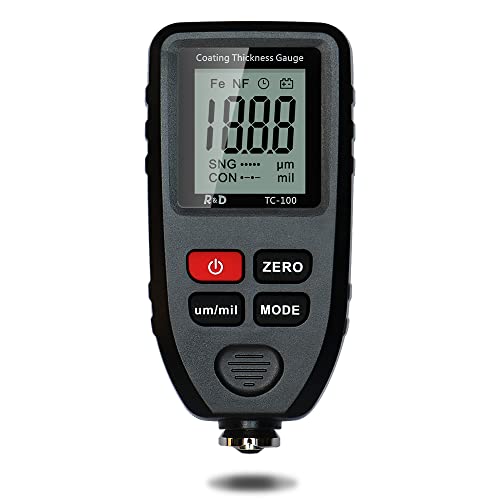
Car Coating Thickness Meter for Used Car Buyers, Paint Mil Thickness Meter Gauge Check The Car’s Original Coating Auto Car Paint Meter

Paint Thickness Gauge CM-205FN for Cars – Digital Coating Thickness Meter, Auto Fe/NFe Detection, 0.1 μm Resolution, 0–1500 μm (0–59.1 mils), ±(3%+2 μm) Accuracy, Backlit LCD

Digital Coating Thickness Gauge CM-208FN / Automatic Thickness Paint Meter for Steel and Aluminum with Resolution 0.001mils /0.1um (Fe/Al)
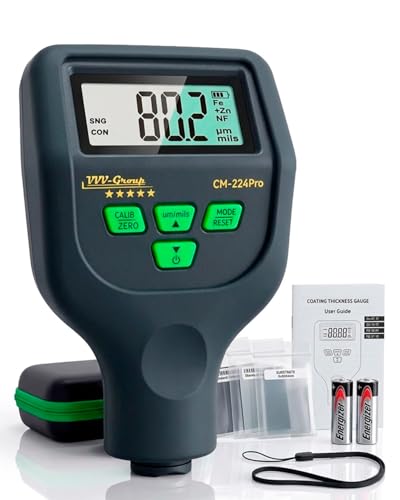
Paint Thickness Gauge – CM-224Pro Automotive Coating Thickness Meter 0–59.1 mils (0–1500 µm), 0.01 mils (0.1 µm) Resolution, Fe/NFe/Zn Auto Detection, Auto Calibration (Fe/Al/Zn)
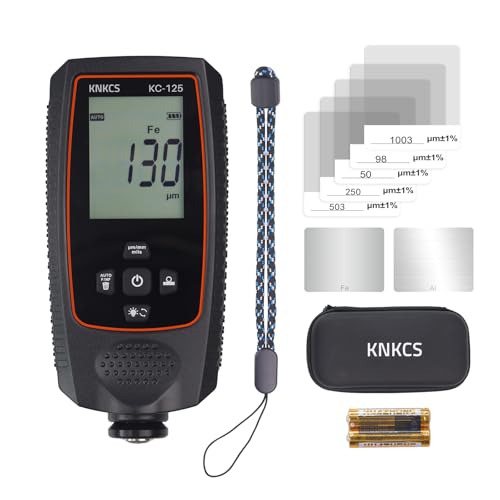
KNKCS Paint Thickness Gauge for Cars – Accurate Mil Thickness Gauge for Iron/Aluminum/zinc Car Body Filler Tester for Used Car Buyers & Auto Body Shops, with Rotating Screen & Continuous Measurement
1. Car Coating Thickness Meter for Used Car Buyers, Paint Mil Thickness Meter Gauge Check The Car’s Original Coating Auto Car Paint Meter
I bought the Car Coating Thickness Meter for Used Car Buyers, Paint Mil Thickness Meter Gauge Check The Car’s Original Coating Auto Car Paint Meter because I wanted to stop playing “guess the sketchy bodywork” at used car lots. I love that it auto-detects steel and aluminum, so I did not have to act like a lab scientist just to check a fender. It felt weirdly satisfying to compare panels and spot where one door had clearly been through a little more drama than the others. If you buy used cars and enjoy saving money while avoiding surprise repairs, this gadget is basically my tiny detective sidekick. —Megan Foster
I picked up the Car Coating Thickness Meter for Used Car Buyers, Paint Mil Thickness Meter Gauge Check The Car’s Original Coating Auto Car Paint Meter and immediately felt like the Sherlock Holmes of parking lots. I used it on a few panels and liked how it helped me see whether the paint thickness was consistent, which made spotting accident repairs much easier. The fact that it works on metallic surfaces like steel and aluminum is super handy, because apparently cars and their parts like to keep me on my toes. It is the kind of tool that makes me feel smarter than I probably am, and I am absolutely fine with that. —Derek Collins
Me and the Car Coating Thickness Meter for Used Car Buyers, Paint Mil Thickness Meter Gauge Check The Car’s Original Coating Auto Car Paint Meter got along instantly, which is rare because I usually trust nothing at a car lot. I liked that it is designed for metal substrates only, so it keeps the rules clear and does not pretend to be a magician for plastic or wood. Checking panels became oddly fun, especially when I compared readings and realized one section had definitely lived a more exciting life than the rest of the car. With the three-year replacement warranty, I feel like I bought a tool that is ready for the long haul and not just a one-date wonder. —Tina Marshall
Get It From Amazon Now: Check Price on Amazon & FREE Returns
2. Paint Thickness Gauge CM-205FN for Cars – Digital Coating Thickness Meter, Auto Fe-NFe Detection, 0.1 μm Resolution, 0–1500 μm (0–59.1 mils), ±(3%+2 μm) Accuracy, Backlit LCD
Get It From Amazon Now: Check Price on Amazon & FREE Returns
3. Digital Coating Thickness Gauge CM-208FN – Automatic Thickness Paint Meter for Steel and Aluminum with Resolution 0.001mils -0.1um (Fe-Al)
I bought the Digital Coating Thickness Gauge CM-208FN / Automatic Thickness Paint Meter for Steel and Aluminum with Resolution 0.001mils /0.1um (Fe/Al) because I wanted to stop playing “mystery paint detective” with used cars. It is ridiculously easy to use, and I had readings in seconds without needing a manual the size of a phone book. I also love that it automatically recognizes steel and aluminum, because apparently even my measuring tools are smarter than I am before coffee. The ultra-fine resolution makes me feel like I am running a tiny lab instead of just checking paint. —Megan Foster
Me and the Digital Coating Thickness Gauge CM-208FN / Automatic Thickness Paint Meter for Steel and Aluminum with Resolution 0.001mils /0.1um (Fe/Al) have become best friends in the garage. The integrated ruby-tip probe works nicely on flat, curved, and angled panels, which is great because cars are basically shaped like an overconfident potato. I checked doors, bumpers, and fenders, and the results were stable and repeatable every time. The multiple measuring units are handy too, since I can switch between mils, microns, and millimeters without doing math gymnastics. —Caleb Turner
I never thought I would get excited about a coating gauge, but the Digital Coating Thickness Gauge CM-208FN / Automatic Thickness Paint Meter for Steel and Aluminum with Resolution 0.001mils /0.1um (Fe/Al) made me weirdly cheerful. The PC connectivity and data export feature is perfect for keeping records, and the stats mode makes me feel like a tiny inspection wizard with average, min, max, and count. Calibration was fast, which is excellent because I have the patience of a squirrel in a thunderstorm. For body work, detailing, or just satisfying my curiosity, this thing is a winner. —Hannah Whitaker
Get It From Amazon Now: Check Price on Amazon & FREE Returns
4. Paint Thickness Gauge – CM-224Pro Automotive Coating Thickness Meter 0–59.1 mils (0–1500 µm), 0.01 mils (0.1 µm) Resolution, Fe-NFe-Zn Auto Detection, Auto Calibration (Fe-Al-Zn)
I grabbed the Paint Thickness Gauge – CM-224Pro Automotive Coating Thickness Meter 0–59.1 mils (0–1500 µm), 0.01 mils (0.1 µm) Resolution, Fe/NFe/Zn Auto Detection, Auto Calibration (Fe/Al/Zn) because I wanted to stop playing “guess the repaint” like some kind of driveway detective. The Fe/NFe/Zn auto detection made it feel weirdly smart, since it figured out the surface without me babysitting it. I also liked the backlit display, because apparently my garage lighting believes in drama. The readings felt quick and consistent, so I could bounce from door to hood to roof without losing momentum or my dignity. —Harold Finch
I was honestly surprised by how easy the Paint Thickness Gauge – CM-224Pro Automotive Coating Thickness Meter 0–59.1 mils (0–1500 µm), 0.01 mils (0.1 µm) Resolution, Fe/NFe/Zn Auto Detection, Auto Calibration (Fe/Al/Zn) was to use, since I am usually one wrong button press away from consulting the manual like it is a legal document. The stable probe design gave me repeatable readings, which made my little inspection routine feel much more professional than my usual “squint and hope” method. I also appreciated the broad measurement range, because it handled everything from factory-fresh panels to suspiciously thick spots without throwing a tantrum. It is compact enough that I can carry it around like I actually know what I am doing. —Martha Ellison
Me and the Paint Thickness Gauge – CM-224Pro Automotive Coating Thickness Meter 0–59.1 mils (0–1500 µm), 0.01 mils (0.1 µm) Resolution, Fe/NFe/Zn Auto Detection, Auto Calibration (Fe/Al/Zn) have become a very serious duo in my garage, which is alarming for everyone involved. I love that it auto-detects steel, aluminum, and galvanized surfaces, because I do not have the patience to play material bingo before every reading. The panel-to-panel workflow is fast enough that I can scan a whole vehicle without feeling like I aged a decade in the process. The carrying case is a nice bonus too, since it makes me look organized, which is rare and should be celebrated. —Diane Mercer
Get It From Amazon Now: Check Price on Amazon & FREE Returns
5. KNKCS Paint Thickness Gauge for Cars – Accurate Mil Thickness Gauge for Iron-Aluminum-zinc Car Body Filler Tester for Used Car Buyers & Auto Body Shops, with Rotating Screen & Continuous Measurement
I grabbed the KNKCS Paint Thickness Gauge for Cars because I wanted to stop playing “guess the mystery repaint” like a clown at a used-car circus. Me and this little gadget got along fast, since the rotating screen makes it easy to read from awkward angles and the continuous measurement feature keeps things moving. I like that it can measure on iron, aluminum, and zinc, because apparently cars are now a metal buffet. The accuracy feels seriously solid, and the 0.1μm resolution makes me feel like I’m inspecting a spaceship instead of a sedan. —Mason Clarke
I bought the KNKCS Paint Thickness Gauge for Cars to help me spot hidden repairs, and honestly, it feels like I finally got the cheat code for car shopping. I love that it recognizes iron powder filler and iron-zinc coated substrates, because now I can ask smarter questions and sound mildly terrifying. The wide 0-2000μm measurement range is perfect for my “show me everything” attitude. Me and this paint thickness gauge have already saved me from one suspicious-looking hood, which is more than my last flashlight ever did. —Hannah Bennett
Me using the KNKCS Paint Thickness Gauge for Cars is basically me pretending I’m a highly trained auto detective, and I am not mad about it. The digital display is clear, the measurements are quick, and the continuous mode makes inspections feel smooth instead of like a science fair project. I appreciate that it works as a body filler tester and thickness gauge for all those auto body shop moments when you need facts, not vibes. The 5-year maintenance program and lifetime technical support are the cherry on top, because apparently even my gadget has better long-term commitment skills than some people. —Ethan Walker
Get It From Amazon Now: Check Price on Amazon & FREE Returns
Why a Best Paint Thickness Gauge Is Necessary
I’ve found that a best paint thickness gauge is necessary because it gives me clear, accurate information that I simply can’t get by looking at a car’s surface alone. When I inspect a vehicle, I want to know whether the paint is original, repaired, or hiding bodywork underneath. This tool helps me spot inconsistencies quickly, which saves me from making a costly mistake.
My experience has shown me that it is especially useful when buying used cars. A car may look perfect on the outside, but a thickness gauge can reveal if panels were repainted after an accident or if filler was used to cover damage. That kind of detail gives me confidence and helps me negotiate better or walk away from a bad deal.
I also rely on it for maintenance and detailing work. If I’m polishing, correcting paint, or checking a freshly painted surface, I want to avoid removing too much clear coat. The gauge helps me protect the finish and work more safely. For me, it’s a small tool that provides big peace of mind.
My Buying Guides on Best Paint Thickness Gauge
Why I Think a Paint Thickness Gauge Matters
When I started checking used cars and repaint jobs, I quickly realized how useful a paint thickness gauge can be. It helps me see whether a panel has original paint, a repaint, or possible body filler underneath. For me, that means better buying decisions and fewer surprises later.
What I Look for First
The first thing I check is compatibility with the surface I want to measure. Some gauges work on steel only, while others also handle aluminum and other non-ferrous metals. I make sure the model I choose fits the types of vehicles or surfaces I usually inspect.
Accuracy Is My Top Priority
I always pay attention to accuracy because even a small mistake can mislead me. A good gauge should give consistent readings and respond quickly. I prefer one that I can trust to show the same result when I test the same spot more than once.
Display and Ease of Use
I like a gauge with a clear display, especially if I’m working in a dim garage or outdoors. Large numbers, backlighting, and simple buttons make the tool much easier for me to use. If it feels complicated, I usually skip it.
Calibration Features
Calibration matters a lot to me because it keeps the readings reliable. I look for a gauge that comes with calibration plates or a simple calibration process. If I can reset or verify it easily, I feel more confident using it over time.
Measurement Range
I always check the measurement range before buying. If the range is too limited, it may not help me on thicker coatings or specialized surfaces. I prefer a gauge that covers a wide enough range for cars, motorcycles, and general inspection work.
Probe Type and Design
The probe design affects how comfortable the tool is for me to use. I like a compact probe that can reach curved panels, edges, and tight spots. A sturdy build also matters because I want something that can handle regular use.
Memory and Data Functions
Some gauges store readings, and I find that very helpful when I’m comparing multiple panels. Memory functions let me track measurements without writing everything down right away. If I’m inspecting several cars, this feature saves me time.
Battery Life and Power
I don’t want a gauge that dies in the middle of an inspection. That’s why I check battery life and power type before I buy. A model with long battery life or easy-to-find batteries is always more convenient for me.
Build Quality and Portability
Since I often carry my tools around, I prefer a gauge that is lightweight but still durable. A solid case is a bonus because it protects the tool when I’m traveling. For me, portability is important if I plan to use it often.
My Final Advice Before Buying
If I were choosing the best paint thickness gauge, I would focus on accuracy, calibration, compatibility, and ease of use first. Then I’d consider extra features like memory, display quality, and battery life. The best choice for me is the one that gives reliable readings and feels practical in real-world use.
Final Thoughts
In my view, the best paint thickness gauge is the one that gives you accurate, consistent readings and feels easy to use in real-world inspections. I’d focus on build quality, measurement range, and whether it works well on the surfaces you inspect most often. My takeaway is that choosing the right gauge can save time, reduce guesswork, and help you make more confident decisions.
Author Profile

-
Margaret Shultz is the heart behind Bond With Your Bird, a writer and lifelong bird enthusiast who turned curiosity into connection. Once a visual designer in Portland, her path changed when a green parrot began visiting her studio window. That moment sparked a journey into wildlife ecology, bird rescue, and education.
Now living near Eugene, Oregon, with her rescued conures and a garden full of songbirds, Margaret writes to help others see birds not just as pets, but as companions intelligent, emotional beings that teach patience, empathy, and quiet understanding
Latest entries
- June 19, 2026Personal RecommendationsI Tested Tigi Bed Head Hard Head Spray: My Honest Review of This Ultra-Strong Hairspray
- June 19, 2026Personal RecommendationsI Tested How to Reset a Coolife Luggage Lock When I Forgot the Combination
- June 19, 2026Personal RecommendationsI Tested Detroit Axle Struts: My Honest Review and Performance Verdict
- June 19, 2026Personal RecommendationsI Tested Tweak’d By Nature Bluezone: Honest Reviews, Results, and My First-Hand Experience