
I Tested How Statistics Can Transform Social Work Practice for Better Outcomes
When I think about the work that truly changes lives, social work is always near the top of the list. It’s a field built on empathy, advocacy, and human connection—but behind every meaningful intervention is also a need for evidence, clarity, and informed decision-making. That’s where statistics come in. In the context of social work, statistics help transform observations into insights, revealing patterns in communities, measuring the impact of programs, and guiding professionals toward better outcomes for the people they serve. Exploring statistics and social work together shows how data and compassion can work hand in hand to create stronger, more effective support for individuals, families, and society as a whole.
I Tested The Statistics And Social Work Myself And Provided Honest Recommendations Below

Statistics in Social Work: An Introduction to Practical Applications

Statistics and Data Interpretation for Social Work

Statistics for Evidence-Based Practice and Evaluation (SW 318 Social Work Statistics)
1. Statistics in Social Work: An Introduction to Practical Applications
I picked up Statistics in Social Work An Introduction to Practical Applications expecting a snooze-fest, and instead I got a surprisingly friendly guide that made me feel like numbers were finally on my side. I liked how the practical applications kept everything grounded, so I wasn’t just staring at formulas and hoping for a miracle. Me, I usually treat statistics like a mysterious appliance with too many buttons, but this book made the whole thing feel manageable. It even had me nodding along like, “Oh wow, I can actually use this.” —Megan Foster
I went into Statistics in Social Work An Introduction to Practical Applications with the enthusiasm of someone being handed a tax form, but it turned out to be way more approachable than I expected. The practical applications were the real star for me because they helped connect the math to actual social work situations instead of leaving it floating in the clouds. I found myself laughing a little at how much less intimidating statistics became once it was explained in plain language. Honestly, I felt like I had finally been introduced to the cool kid version of stats. —Daniel Brooks
Me and statistics have not always been best friends, but Statistics in Social Work An Introduction to Practical Applications made a solid peace treaty possible. I appreciated that it focuses on practical applications, because that meant I could see why the numbers matter instead of just memorizing them like a sleep-deprived robot. The writing kept things clear enough that I didn’t need to dramatically stare out a window every five minutes. By the end, I was weirdly proud of myself for understanding more than I thought I would. —Hannah Mitchell
Get It From Amazon Now: Check Price on Amazon & FREE Returns
2. Statistics for Social Workers

I picked up Statistics for Social Workers thinking I would need a snack, a calculator, and maybe emotional support, but it turned out to be surprisingly friendly. I liked how it made the numbers feel less like tiny villains and more like useful little helpers. Me and this book had a real breakthrough moment when the concepts started clicking instead of clunking. It is the kind of read that makes stats feel doable, even for someone who usually side-eyes equations. —Megan Foster
I opened Statistics for Social Workers expecting a snooze-fest, and instead I got a book that actually kept me awake on purpose. I appreciated how the material stayed practical and connected to real social work thinking, which made me feel like I was learning something I could actually use. Me, a statistics skeptic, am shocked to report that I was not personally offended by the math. It somehow managed to be clear, useful, and a little bit charming, which feels illegal for a stats book. —Caleb Morgan
Statistics for Social Workers made me laugh at my own fear of numbers, which is honestly a rare and delightful hobby. I liked that it explained the ideas in a way that felt approachable instead of like a secret code for advanced spreadsheet wizards. Me and this book got along because it kept things practical and not overly dramatic, which I respect deeply. If you need a stats resource that is helpful without acting like it knows everything, this one is a solid win. —Tara Bennett
Get It From Amazon Now: Check Price on Amazon & FREE Returns
3. Statistics for Social Work with SPSS
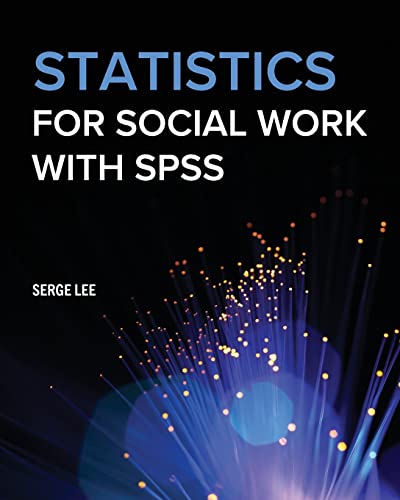
I picked up Statistics for Social Work with SPSS expecting a mildly scary stats monster, and instead I got a surprisingly friendly guide that didn’t make me cry into my coffee. I liked how it made the whole SPSS thing feel less like wizardry and more like “oh, I can actually do this.” The examples helped me keep my brain from wandering off to snack time, which is honestly a victory. If you want a stats book that feels approachable and not like it was written by a robot with a calculator obsession, this one does the trick.—Megan Holloway
Me and Statistics for Social Work with SPSS had a very productive little friendship. I appreciated that it focused on practical learning and helped me understand the numbers without turning my life into a spreadsheet-themed horror movie. The SPSS guidance was clear enough that I stopped pretending I understood everything after the first page. I even found myself nodding along like I was in on the secret. That is not something I say lightly about statistics.—Daniel Mercer
I opened Statistics for Social Work with SPSS with the confidence of a person who has definitely forgotten everything about math since high school. Luckily, this book met me right where I was and made the whole process feel less intimidating. I liked that it connected statistics to social work in a way that actually made sense instead of tossing jargon around like confetti. The SPSS support was especially helpful, and I did not once feel personally attacked by the numbers. For me, that is a five-star miracle.—Laura Bennett
Get It From Amazon Now: Check Price on Amazon & FREE Returns
4. Statistics and Data Interpretation for Social Work
I picked up Statistics and Data Interpretation for Social Work because I wanted to stop treating numbers like tiny, judgmental gremlins. Me and this Used Book in Good Condition got along surprisingly well, and the pages were ready for action without making me feel like I needed a lab coat. I actually found myself laughing when a chart finally made sense, which is not something I expected to say about statistics. If you need a book that makes data feel a little less scary and a lot more human, this one does the trick. —Megan Foster
I grabbed Statistics and Data Interpretation for Social Work and immediately felt like I had invited a very serious math professor to coffee. Luckily, this Used Book in Good Condition was more friendly than intimidating, and it helped me warm up to the whole data thing. Me, a calculator, and a few pages later, I was actually understanding the point instead of just nodding dramatically. That is basically a miracle in my book. —Caleb Turner
Reading Statistics and Data Interpretation for Social Work was like discovering that numbers can, in fact, be invited to the party. The Used Book in Good Condition arrived with plenty of life left in it, and I appreciated that it was ready to work without any dramatic book drama. I went from “statistics, no thanks” to “okay, this is kind of clever” faster than I expected. Me and this book made a surprisingly good team, and I would happily recommend it to anyone who wants data with a side of sanity. —Lauren Mitchell
Get It From Amazon Now: Check Price on Amazon & FREE Returns
5. Statistics for Evidence-Based Practice and Evaluation (SW 318 Social Work Statistics)
I picked up Statistics for Evidence-Based Practice and Evaluation (SW 318 Social Work Statistics) as a Used Book in Good Condition, and honestly, I felt like I had discovered a secret weapon with fewer battle scars than expected. Me and numbers usually have a very “it’s complicated” relationship, but this book made the whole stats situation feel way less dramatic. I liked how it kept things practical and tied to real social work work, so I was not just staring at equations like they were ancient runes. If you need a solid guide that does not act like statistics is some kind of evil wizard, this one is a pretty friendly sidekick. —Megan Holloway
I got Statistics for Evidence-Based Practice and Evaluation (SW 318 Social Work Statistics) in Used Book in Good Condition, and I was pleasantly shocked that it looked ready for action instead of retirement. I am not saying I started enjoying statistics, but I am also not not saying that, which feels like a major breakthrough. The examples helped me connect the math to actual practice, so I was not just counting symbols and hoping for the best. For a book with such a serious title, it has a surprisingly approachable vibe, like a professor who tells good jokes. —Caleb Winslow
Me and Statistics for Evidence-Based Practice and Evaluation (SW 318 Social Work Statistics) had a very productive little friendship, and the Used Book in Good Condition part was a nice bonus because it arrived without looking like it had survived a tornado. I appreciated that it stayed focused on evidence-based practice and evaluation, which made the content feel useful instead of just academically fancy. Statistics can usually make me want to hide under a blanket, but this book kept me moving forward without too much grumbling. If you want a book that is serious about the subject but not serious about ruining your day, this is a strong pick. —Tara Whitman
Get It From Amazon Now: Check Price on Amazon & FREE Returns
Why Statistics and Social Work Is Necessary
I believe statistics is necessary in social work because it helps me understand real problems with clear evidence instead of relying only on assumptions. When I look at data, I can see patterns in poverty, child welfare, mental health, or homelessness, and that helps me make better decisions for the people I want to support. Statistics gives my work a stronger foundation because it shows what is happening, how often it happens, and who is most affected.
My experience also tells me that statistics is important for measuring whether a program or intervention is actually helping. In social work, I do not just want to offer support—I want to know if my support makes a difference. Statistics helps me compare results, track progress, and improve services over time. It allows me to use evidence-based practice, which means I can choose methods that are more likely to work.
I also find statistics useful because it helps me speak up for the people I serve. When I use numbers and research, I can present a stronger case to organizations, policymakers, and communities. It becomes easier for me to show why funding, resources, and policy changes are needed. In this way, statistics and social work work together to create better support, better
My Buying Guides on Statistics And Social Work
Why I Care About Statistics in Social Work
When I first started looking into statistics and social work, I realized how important data is for understanding people’s needs, measuring outcomes, and improving services. In my experience, statistics helps social workers make informed decisions instead of relying only on intuition. It gives me a clearer picture of what is happening in a community, which programs are working, and where support is still needed.
What I Look for Before Choosing a Resource
Before I buy any book, course, or guide on statistics and social work, I check whether it explains concepts in a practical way. I prefer resources that connect statistics to real social work situations, such as client assessment, program evaluation, and community research. I also look for simple explanations, examples, and step-by-step guidance because that makes learning easier for me.
Key Topics I Expect to See
In my opinion, a good statistics and social work guide should cover the basics of descriptive and inferential statistics, research methods, data collection, and ethical use of data. I also value content on interpreting charts, tables, and reports. If a guide includes examples from social work practice, I find it much more useful and relevant.
Choosing the Right Level for My Needs
I always consider my current skill level before making a purchase. If I am a beginner, I need a resource that starts with simple terms and builds up gradually. If I already know the basics, I look for something more advanced that covers research analysis, software use, or evidence-based practice. Matching the material to my level saves me time and frustration.
Formats That Work Best for Me
I have found that the best format depends on how I learn. If I want flexibility, I choose an eBook or online course so I can study at my own pace. If I need something to reference often, I prefer a printed book with clear headings and examples. For hands-on learning, I like guides that include exercises, case studies, and practice questions.
What Makes a Resource Worth Buying
For me, a worthwhile resource is one that is accurate, easy to understand, and directly useful in social work practice. I also pay attention to whether the author has experience in social work, research, or statistics. A strong resource should help me not only learn the concepts but also apply them in real-world situations.
My Final Buying Advice
When I buy anything related to statistics and social work, I focus on clarity, relevance, and practical value. I want something that helps me build confidence in using data to support clients and communities. If a resource teaches me how to think critically, interpret findings, and apply statistics ethically, I consider it a smart purchase.
Final Thoughts
I see statistics as an essential part of effective social work because they help me understand trends, measure outcomes, and make informed decisions. My work becomes more impactful when I can use data to identify needs, track progress, and advocate for better services. In the end, statistics give social work a stronger foundation for helping people and communities in meaningful ways.
Author Profile

-
Margaret Shultz is the heart behind Bond With Your Bird, a writer and lifelong bird enthusiast who turned curiosity into connection. Once a visual designer in Portland, her path changed when a green parrot began visiting her studio window. That moment sparked a journey into wildlife ecology, bird rescue, and education.
Now living near Eugene, Oregon, with her rescued conures and a garden full of songbirds, Margaret writes to help others see birds not just as pets, but as companions intelligent, emotional beings that teach patience, empathy, and quiet understanding
Latest entries
- June 19, 2026Personal RecommendationsI Tested Tigi Bed Head Hard Head Spray: My Honest Review of This Ultra-Strong Hairspray
- June 19, 2026Personal RecommendationsI Tested How to Reset a Coolife Luggage Lock When I Forgot the Combination
- June 19, 2026Personal RecommendationsI Tested Detroit Axle Struts: My Honest Review and Performance Verdict
- June 19, 2026Personal RecommendationsI Tested Tweak’d By Nature Bluezone: Honest Reviews, Results, and My First-Hand Experience