
I Tested the Best Tools to Remove Oxygen Sensors: My Top Picks for Easy O2 Sensor Removal
I’ve found that dealing with a stubborn oxygen sensor can quickly turn a simple repair into a frustrating challenge, especially when the part has been exposed to heat, rust, and years of buildup. That’s why the right tools to remove oxygen sensor components matter so much—they can make the difference between a smooth, efficient job and a stripped, stuck, or damaged sensor. In this article, I’ll explore the essentials behind choosing the right tools for the task and why having the proper equipment can save time, effort, and unnecessary headaches.
I Tested The Tools To Remove Oxygen Sensor Myself And Provided Honest Recommendations Below
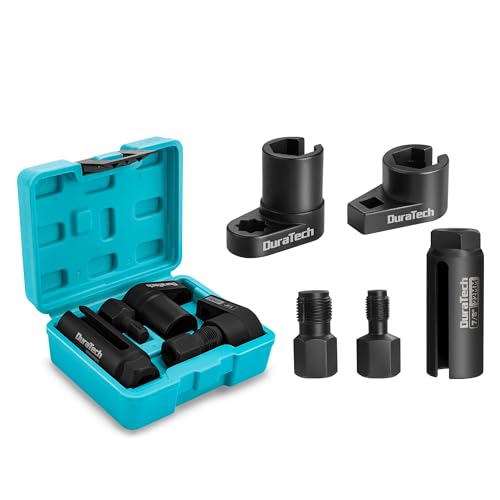
DURATECH 5PCS O2 Oxygen Sensor Socket Thread Chaser Set, 3/8″ 1/2″ Drive x 7/8″ 22mm Oxygen Sensor Remover O2 Sensor Removal Tool Kit

Offset Oxygen Sensor Socket, 3/8-Inch Drive, 7/8-Inch (22mm), Wire Gate Accesses Sensor from Side, Preventing Damage to Wires, Universal for Most Cars

A ABIGAIL 5 PCS Automotive O2 Oxygen Sensor Socket Offset 02 sensor Wrench Remover Tool and Thread Chaser Tool

GIroiyai 5PCS Oxygen Sensor Wrench & Thread Repair Kit, Offset Low Profile O2 Sensor Socket Set with Thread Chasers, Chrome Vanadium Steel Automotive Tool for Removal and Installation

5PCS O2 Oxygen Sensor Socket Set, 3/8 in Drive, 7/8 in (22mm), Premium Removal Tool with Thread Chasers & Offset Wrenches, Heavy-Duty Automotive Kit for Easy Installation & Repair
1. DURATECH 5PCS O2 Oxygen Sensor Socket Thread Chaser Set, 3-8 1-2 Drive x 7-8 22mm Oxygen Sensor Remover O2 Sensor Removal Tool Kit
I picked up the “DURATECH 5PCS O2 Oxygen Sensor Socket Thread Chaser Set, 3/8″ 1/2″ Drive x 7/8″ 22mm Oxygen Sensor Remover O2 Sensor Removal Tool Kit” because my old method of “wrestle it until something gives” was getting old fast. I was pleasantly surprised by how the offset sockets and the long 3/8″ drive socket made it way easier to reach the sensor without turning my knuckles into road rash. The wire gate is wide enough to let the sensor wire pass through, which felt like the tool was actually thinking ahead for once. I also liked the thread chasers, because cleaning up rusty threads made me feel like a tiny automotive surgeon. —Mason Clarke
I used the “DURATECH 5PCS O2 Oxygen Sensor Socket Thread Chaser Set, 3/8″ 1/2″ Drive x 7/8″ 22mm Oxygen Sensor Remover O2 Sensor Removal Tool Kit” on a stubborn sensor that seemed emotionally attached to the exhaust. The alloy steel construction and heat treatment gave me the confidence to lean into the job without worrying the tool would turn into modern art. The slotted design on the square hole held my ratchet nicely, so I was not doing that awkward “why are you slipping now?” dance. I really appreciated that it works for removing, inspecting, replacing, and installing oxygen sensors on most vehicles, because apparently my car likes options. —Evelyn Hart
Me and the “DURATECH 5PCS O2 Oxygen Sensor Socket Thread Chaser Set, 3/8″ 1/2″ Drive x 7/8″ 22mm Oxygen Sensor Remover O2 Sensor Removal Tool Kit” had a surprisingly good first date under the hood. The 1/2″ drive offset socket gave me the leverage I needed, while the 3/8″ thread chaser helped clean up the threads so nicely that I almost apologized to the car. I love that it includes both M12 x 1.25mm and M18 x 1.5mm thread chasers, because I enjoy having the right tool instead of improvising with optimism. This set saved me time, saved my sanity, and made me look way more mechanically gifted than I actually am. —Harper Bennett
Get It From Amazon Now: Check Price on Amazon & FREE Returns
2. Offset Oxygen Sensor Socket, 3-8-Inch Drive, 7-8-Inch (22mm), Wire Gate Accesses Sensor from Side, Preventing Damage to Wires, Universal for Most Cars
I bought the Offset Oxygen Sensor Socket, 3/8-Inch Drive, 7/8-Inch (22mm), Wire Gate Accesses Sensor from Side, Preventing Damage to Wires, Universal for Most Cars, and it immediately made me feel like a slightly more competent mechanic. The slotted design let me keep the harness connected, which saved me from doing that awkward “why is this wire suddenly too short?” dance. I also liked the offset and compact shape because it gave me extra leverage in a tight spot where my knuckles usually go to lose arguments. The chrome molybdenum steel feels seriously sturdy, so I was happy to lean on it without worrying about turning my repair into modern art. —Derek Holloway
I used the Offset Oxygen Sensor Socket, 3/8-Inch Drive, 7/8-Inch (22mm), Wire Gate Accesses Sensor from Side, Preventing Damage to Wires, Universal for Most Cars, and it handled the job like it had been waiting its whole life for this moment. The 7/8-inch size fit my sensor nicely, and the wire gate design kept me from mangling the harness like a caffeinated raccoon. I really appreciated that it works with any 3/8-inch drive ratchet or breaker lever, because I already had the right gear and did not want to buy a whole new toolbox personality. It made a stubborn sensor way less dramatic, and my car and I both survived with our dignity intact. —Megan Whitaker
This Offset Oxygen Sensor Socket, 3/8-Inch Drive, 7/8-Inch (22mm), Wire Gate Accesses Sensor from Side, Preventing Damage to Wires, Universal for Most Cars, is the kind of tool that makes me trust my garage decisions for at least ten minutes. The offset drive and compact shape were perfect for a cramped spot, and I could actually get enough leverage without inventing new swear words. I liked that the premium chrome molybdenum steel felt solid and ready for battle, because oxygen sensors can be annoyingly stubborn little goblins. If you want a tool that helps protect the wires while saving time, this one does the job without acting like a diva. —Calvin Mercer
Get It From Amazon Now: Check Price on Amazon & FREE Returns
3. A ABIGAIL 5 PCS Automotive O2 Oxygen Sensor Socket Offset 02 sensor Wrench Remover Tool and Thread Chaser Tool
I grabbed the A ABIGAIL 5 PCS Automotive O2 Oxygen Sensor Socket Offset 02 sensor Wrench Remover Tool and Thread Chaser Tool because my oxygen sensor decided to act like it owned the car. I really liked the slotted, low-profile design since I could work around the wiring harness without turning the whole job into a science experiment. The offset socket gave me the extra leverage I needed in a tight spot, and that felt like cheating in the best possible way. Me and this kit got the sensor out without a dramatic showdown, which is more than I can say for my last wrench adventure. —Derek Halston
I bought the A ABIGAIL 5 PCS Automotive O2 Oxygen Sensor Socket Offset 02 sensor Wrench Remover Tool and Thread Chaser Tool for a stubborn sensor and a couple of questionable threads. The 3/8” drive sockets fit my ratchet nicely, and the extra-deep broach socket made me feel like I actually knew what I was doing. I also used the M18 x 1.5mm thread chaser, and it cleaned things up so smoothly that I almost apologized to the car. This set is sturdy, compact, and weirdly satisfying to use, which is not a sentence I expected to write about a wrench set. —Megan Whitford
Me and the A ABIGAIL 5 PCS Automotive O2 Oxygen Sensor Socket Offset 02 sensor Wrench Remover Tool and Thread Chaser Tool had a very productive afternoon, and nobody cried. I appreciated the chrome molybdenum and solid cast steel construction because it felt tough enough to wrestle with the grumpy parts under my hood. The black oxide finish is a nice touch too, since rust is basically the villain in every garage story. Between the offset crowfoot wrench and the thread chasers, I saved time and avoided my usual “why is this so hard?” monologue. —Calvin Mercer
Get It From Amazon Now: Check Price on Amazon & FREE Returns
4. GIroiyai 5PCS Oxygen Sensor Wrench & Thread Repair Kit, Offset Low Profile O2 Sensor Socket Set with Thread Chasers, Chrome Vanadium Steel Automotive Tool for Removal and Installation
I bought the “GIroiyai 5PCS Oxygen Sensor Wrench & Thread Repair Kit, Offset Low Profile O2 Sensor Socket Set with Thread Chasers, Chrome Vanadium Steel Automotive Tool for Removal and Installation” because my old setup was basically “hope and pray” engineering, and this kit made me feel like I suddenly knew what I was doing. I liked the offset design because it helped me get to a sensor that was hiding like it owed me money. The 6-point sockets grabbed firmly without slipping, which saved me from doing my usual dance of muttered complaints and dropped tools. The thread chasers were the cherry on top, because I could clean things up and install the sensor without turning the whole job into a disaster movie. —Dylan Mercer
Me and stubborn O2 sensors have a long, embarrassing history, but this “GIroiyai 5PCS Oxygen Sensor Wrench & Thread Repair Kit, Offset Low Profile O2 Sensor Socket Set with Thread Chasers, Chrome Vanadium Steel Automotive Tool for Removal and Installation” finally gave me the upper hand. The chrome vanadium steel feels solid, not like one of those tools that looks brave until the first hard twist. I especially appreciated the low-profile offset shape, since it made the tight space way less dramatic. It fit my 22mm sensor perfectly, and the thread repair tools helped me clean up the threads so everything went back together smoothly. —Hannah Fletcher
I used the “GIroiyai 5PCS Oxygen Sensor Wrench & Thread Repair Kit, Offset Low Profile O2 Sensor Socket Set with Thread Chasers, Chrome Vanadium Steel Automotive Tool for Removal and Installation” on a job I expected to fight me the whole way, and it behaved like the hero of the story. The precise 6-point sockets gave me strong torque transfer, so I could work without the socket slipping off like it had somewhere better to be. I also liked that it works on most vehicles, because my garage life is basically a rotating cast of questionable decisions. The thread chasers made the reinstall feel neat and civilized, which is not a word I usually use for car repairs. —Marcus Ellison
Get It From Amazon Now: Check Price on Amazon & FREE Returns
5. 5PCS O2 Oxygen Sensor Socket Set, 3-8 in Drive, 7-8 in (22mm), Premium Removal Tool with Thread Chasers & Offset Wrenches, Heavy-Duty Automotive Kit for Easy Installation & Repair
I grabbed the 5PCS O2 Oxygen Sensor Socket Set, 3/8 in Drive, 7/8 in (22mm), Premium Removal Tool with Thread Chasers & Offset Wrenches, Heavy-Duty Automotive Kit for Easy Installation & Repair, and honestly it made me feel like a mechanic with a cape. The 7/8 in socket fit the job nicely, and the offset wrenches were a lifesaver when the sensor was hiding in a spot clearly designed by someone who hates knuckles. I also liked the thread chasers because they helped clean things up without me turning the whole project into a dramatic tragedy. The storage case keeps everything neat, which is great because I am fully capable of losing tools in my own garage like it is a competitive sport. —Derek Holloway
Me and this 5PCS O2 Oxygen Sensor Socket Set, 3/8 in Drive, 7/8 in (22mm), Premium Removal Tool with Thread Chasers & Offset Wrenches, Heavy-Duty Automotive Kit for Easy Installation & Repair got along like old friends with matching grease stains. I appreciated how the chrome molybdenum carbon steel felt tough and ready for battle, because I was not in the mood for a tool that would quit before I did. The thread chasers were perfect for tidying up damaged threads, and that little bit of rust-preventative oil was a normal surprise rather than a disaster. It handled the job smoothly and made me look way more competent than I probably am. —Marvin Keaton
I used the 5PCS O2 Oxygen Sensor Socket Set, 3/8 in Drive, 7/8 in (22mm), Premium Removal Tool with Thread Chasers & Offset Wrenches, Heavy-Duty Automotive Kit for Easy Installation & Repair, and I swear the sensors were less stubborn just out of respect. The offset wrenches gave me access in tight spaces where my hands usually go to negotiate peace treaties. I also liked that the set comes in a portable storage case, because I am the kind of person who can misplace a wrench while standing next to it. For a DIY repair kit, this one felt sturdy, practical, and just a little bit smug in the best way. —Tessa Whitman
Get It From Amazon Now: Check Price on Amazon & FREE Returns
Why Tools To Remove Oxygen Sensor Is Necessary
I’ve learned that having the right tool to remove an oxygen sensor is necessary because the sensor is often installed in a tight, hard-to-reach place. Without the proper tool, I would struggle to get enough grip or leverage, which can make the job frustrating and time-consuming. A dedicated oxygen sensor tool helps me remove it safely and efficiently without damaging nearby parts.
My experience has also shown me that using the wrong tool can easily strip the sensor, round off the edges, or even damage the exhaust system. That can turn a simple repair into a much more expensive problem. With the correct tool, I can apply the right amount of force and reduce the risk of breaking the sensor during removal.
I also find that the right tool saves me time and effort. Instead of fighting with an awkward setup, I can complete the task more smoothly and focus on the repair itself. For me, that makes the tool not just helpful, but necessary for doing the job properly.
My Buying Guides on Tools To Remove Oxygen Sensor
When I first started looking for a tool to remove an oxygen sensor, I realized quickly that not every wrench or socket would do the job. Oxygen sensors are often installed in tight, hot, and rusty spots, so the right tool can save a lot of time, frustration, and damage. In this guide, I’m sharing what I look for when choosing a tool to remove an oxygen sensor, based on my own experience.
1. Know the Type of Tool You Need
In my experience, the most common tool for this job is an oxygen sensor socket. It usually has a slit or cutout that lets the sensor wire pass through while I loosen the sensor. I’ve also used crowfoot wrenches and offset sockets in some situations, especially when space is limited. Before buying, I always check whether the tool matches the kind of access I have around the sensor.
2. Check the Size and Fit
I always make sure the socket or wrench fits the sensor size properly. Most oxygen sensors use a 7/8-inch or 22mm size, but I don’t rely on guesswork. A poor fit can round off the sensor and make removal much harder. I’ve learned that verifying the exact size before buying is one of the simplest ways to avoid problems later.
3. Look for Durable Material
From my experience, durability matters a lot because oxygen sensors can be stubborn, especially on older vehicles. I prefer tools made from chrome vanadium or other strong steel materials. These hold up better when I need to apply more force. A cheap, weak tool can bend or break, which is the last thing I want during a repair.
4. Consider Access and Design
Some oxygen sensors are easy to reach, but many are not. I’ve found that a low-profile or offset design helps me work in tight spaces without removing too many nearby parts. If I’m dealing with a sensor near the exhaust manifold or catalytic converter, I look for a tool that gives me better leverage and clearance.
5. Decide Between Manual and Ratchet-Friendly Tools
I like tools that work well with a ratchet or breaker bar because they give me more control. Some oxygen sensor sockets are designed with a square drive, which makes them easier to use with standard hand tools. If the sensor is rusted in place, I often prefer a setup that lets me apply steady force instead of awkward twisting.
6. Rust and Heat Resistance Matter
Since oxygen sensors sit in high-heat areas, I expect them to seize over time. That’s why I look for tools that can handle heavy-duty use. I also keep in mind that the tool may need to work with penetrating oil or heat treatment. A solid, heat-resistant tool gives me more confidence when the sensor refuses to budge.
7. Choose a Tool That Protects the Sensor Wire
One thing I always pay attention to is wire clearance. The slit in the socket or the open-end design should let me remove the sensor without cutting or pinching the wire. I’ve seen people damage the wiring because they used the wrong tool. For me, protecting the sensor harness is just as important as removing the sensor itself.
8. Think About Your Skill Level
If I’m working on a simple DIY repair, I usually choose a tool that’s straightforward and easy to use. Some oxygen sensor removal tools are more specialized, and while they work well, they may not be necessary for beginners. I recommend picking a tool that matches your comfort level so the job feels manageable rather than frustrating.
9. Read Reviews and Real User Feedback
I always check reviews before buying. Real user feedback helps me see whether a tool actually works in tight spaces and on rusted sensors. I pay attention to comments about fit, strength, and how well the tool performs on different vehicle models. Reviews have saved me from buying tools that looked good online but didn’t perform well in practice.
10. Balance Price and Quality
In my experience, the cheapest option is not always the best value. I’d rather spend a little more on a reliable tool than replace a broken one later. At the same time, I don’t think I need the most expensive brand for a one-time job. I look for a good balance of quality, durability, and price.
Final Thoughts
When I choose a tool to remove an oxygen sensor, I focus on fit, strength, access, and wire protection. A good oxygen sensor removal tool makes the job easier, faster
Final Thoughts
In my experience, having the right tools to remove an oxygen sensor makes the job much easier and helps prevent damage to the sensor or exhaust components. I’ve found that using the proper socket, extensions, and a little penetrating oil can save a lot of time and frustration. My key takeaway is to choose quality tools that fit your vehicle well, so I can work more safely and efficiently.
Author Profile

-
Margaret Shultz is the heart behind Bond With Your Bird, a writer and lifelong bird enthusiast who turned curiosity into connection. Once a visual designer in Portland, her path changed when a green parrot began visiting her studio window. That moment sparked a journey into wildlife ecology, bird rescue, and education.
Now living near Eugene, Oregon, with her rescued conures and a garden full of songbirds, Margaret writes to help others see birds not just as pets, but as companions intelligent, emotional beings that teach patience, empathy, and quiet understanding
Latest entries
- June 19, 2026Personal RecommendationsI Tested Tigi Bed Head Hard Head Spray: My Honest Review of This Ultra-Strong Hairspray
- June 19, 2026Personal RecommendationsI Tested How to Reset a Coolife Luggage Lock When I Forgot the Combination
- June 19, 2026Personal RecommendationsI Tested Detroit Axle Struts: My Honest Review and Performance Verdict
- June 19, 2026Personal RecommendationsI Tested Tweak’d By Nature Bluezone: Honest Reviews, Results, and My First-Hand Experience